
Monday names your right. Wednesday shows the men living the hard work for your right. Friday takes you to a day the papers were sent out to the public. The Substack is free to read, but a paid subscription funds the work.
Here is what went out this week.
Monday — Consent of the governed
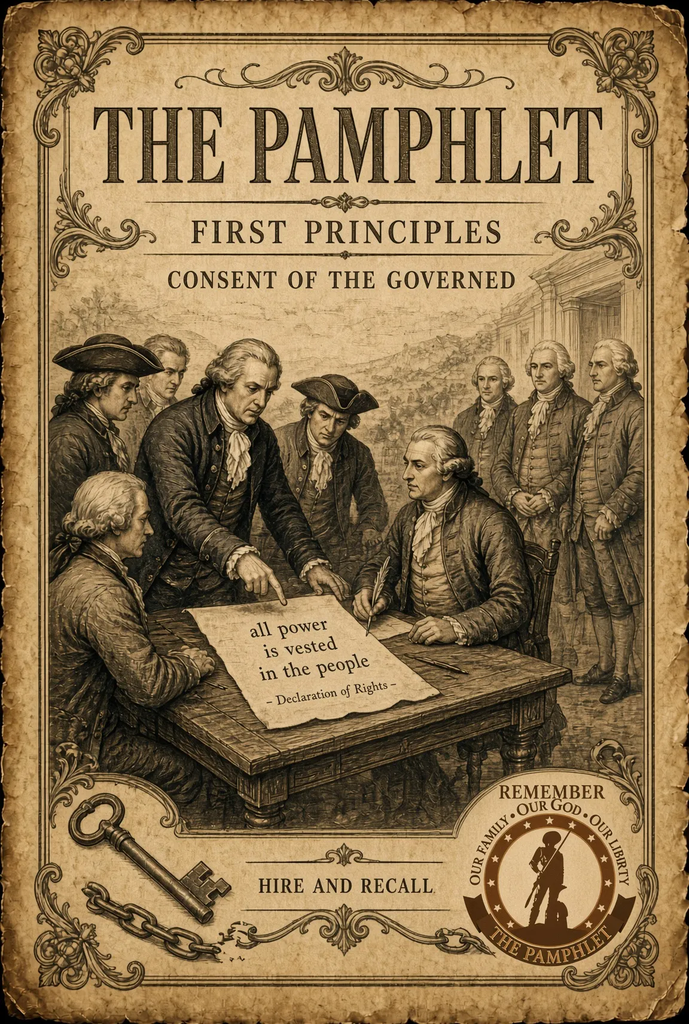
First Principles · 12 October 2026
All political power is derived from the consent of the people. Locke wrote that every man is naturally free, and nothing can put him into subjection to any earthly power but his own consent. The states wrote the same order into their declarations: power is vested in the people, and magistrates are their trustees and servants, at all times amenable to them. Consent is a hire, not a creation. It can be withdrawn. You cannot deed to a politician a power you never owned.
Read it here: First Principles — Consent of the governed
Wednesday — The man who would not sign
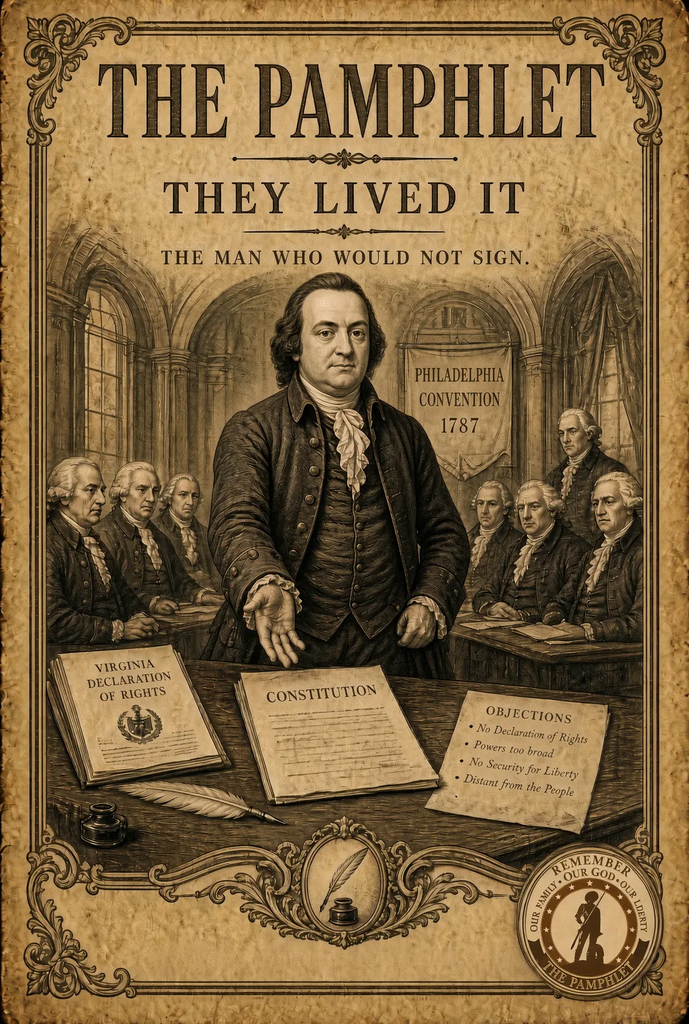
They Lived It · 14 October 2026
George Mason of Virginia wrote the Virginia Declaration of Rights. He sat through the Philadelphia Convention and watched the new framework take shape without a bill of rights and with the supremacy clause as written. He refused to sign. His first objection was plain: there is no Declaration of Rights, and the laws of the general government being paramount, the declarations of rights in the separate states are no security. He wrote his objections and sent them to the people of his state. That is what firing the hired looks like when the hired has not yet taken the office.
Read it here: They Lived It — The man who would not sign
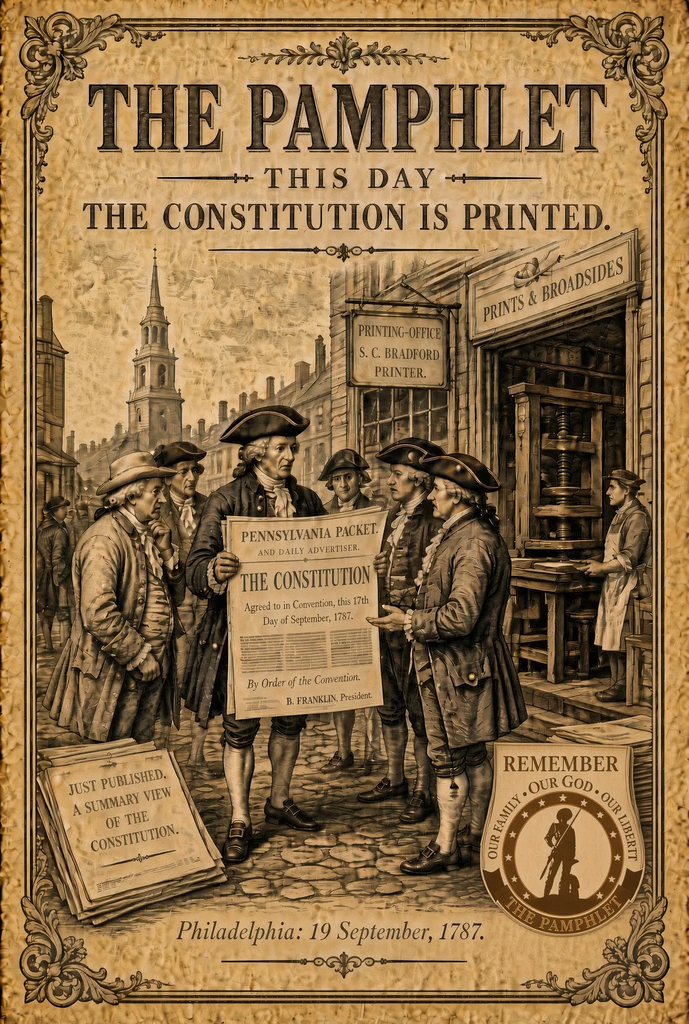
Friday — The Constitution is printed
This Day · 16 October 2026
On 19 September 1787 the Pennsylvania Packet carried the first public printing of the Constitution. The secrecy of the convention ended that week, and the people who had put their faith in representatives started to read for themselves what was proposed. Franklin wrote that they had done their best, and it must take its chance. The papers of the weeks that followed do not tell the same story as later schoolbooks. Celebration and alarm were both in print. The close votes, the refusals to sign, and the argument that the first government should have been reformed rather than replaced filled the papers. The printing started the argument the people were entitled to have.
Read it here: This Day — The Constitution is printed
How to follow the week
The archive and the new posts live at thepamphletllc.substack.com. Free readers get the weekly teaching. Paid subscribers fund the day-to-day work. Printed copies and the coming volumes will be at www.ThePamphlet.net.